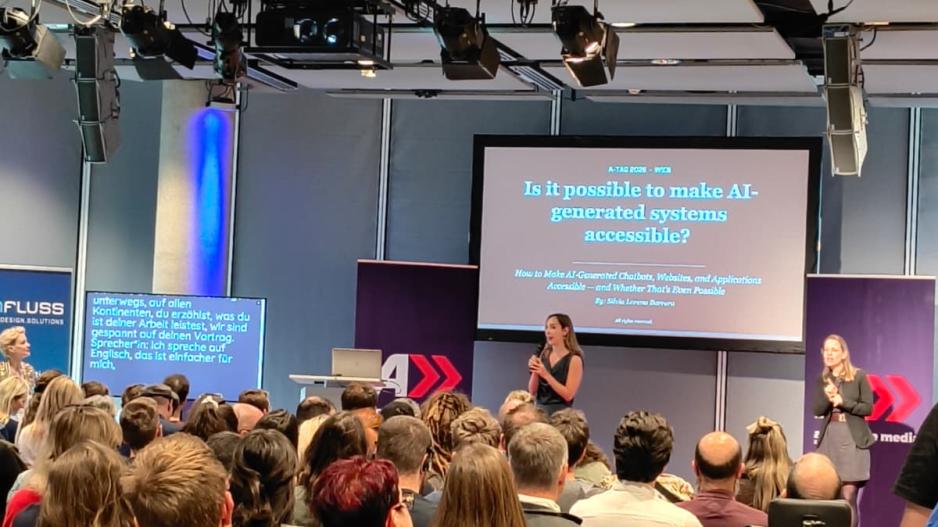
A Full House for Accessibility at A-Tag 2026
A packed venue, engaging discussions, and strong interest in the future of digital inclusion: this year’s A-Tag at Techgate Vienna once again demonstrated the growing importance of digital accessibility.
On May 21, 2026, A-Tag took place at Techgate Vienna, bringing together professionals and enthusiasts dedicated to digital accessibility and inclusive technologies. Organized by Accessible Media since 2006, A-Tag has established itself as a key meeting point for everyone involved in web accessibility, inclusive design, and digital participation.
The event program featured a wide range of presentations and practical insights covering current developments in digital accessibility. Key topics included accessible web design, the implementation of legal requirements such as EU accessibility regulations, the use of artificial intelligence to support accessibility efforts, and the optimization of documents and PDFs for assistive technologies. The agenda was further enriched by hands-on perspectives on developing accessible user interfaces and the importance of clean, semantic code.
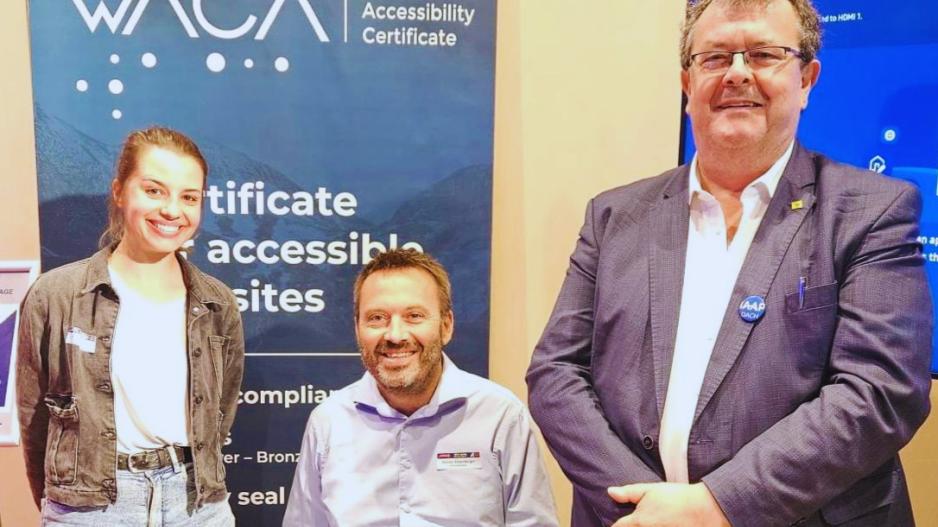
WACA Team at A-Tag: Katharina Schrems (left), Werner Rosenberger (center), Klaus Höckner (right)
The WACA team was also present, represented by Werner Rosenberger, Klaus Höckner, and Katharina Schrems, alongside numerous auditors who actively engaged with attendees, exchanged ideas, and gathered valuable feedback and insights from the community.
Networking and knowledge exchange have always been an integral part of A-Tag. Following the presentations, the traditional “Get Together” provided an opportunity for participants to connect, share experiences, and continue discussions in a relaxed and informal atmosphere.
One of the most remarkable aspects of this year’s event was the exceptionally high attendance. The strong turnout highlighted just how relevant and prominent the topics of digital accessibility and inclusion have become. The diverse community—from developers, designers, and UX specialists to people with disabilities themselves—plays a vital role in shaping the event. This unique mix is what makes A-Tag special. The focus extends beyond technical discussions to include the perspectives and lived experiences of those directly affected, who actively contribute to creating a more inclusive digital world.
The event itself was designed with accessibility in mind. Sign language interpreters accompanied the presentations, and all sessions were live-captioned. In this way, digital and communicative accessibility were not only discussed but actively implemented throughout the event.
Once again, A-Tag conveyed a clear message: digital accessibility is no longer a niche topic—it is an essential component of modern technology development. The event demonstrated the importance of dialogue, collaboration, and shared commitment in ensuring that digital products and services are accessible to everyone.